Code Reviews That Teach, Not Torture: Patterns for Effective, Respectful, and Useful Code Review Culture

Code reviews are supposed to make us better developers — not frustrated ones. Yet, in many teams, they end up feeling like gatekeeping or nitpicking sessions rather than opportunities to grow. The difference between a painful and productive review usually comes down to culture and process, not just tooling.
Let’s look at what makes code reviews actually teach — not torture.
- Start With Shared Goals
A code review isn’t about proving who’s right; it’s about ensuring the codebase remains maintainable, consistent, and aligned with team standards. Before discussing specifics, teams should agree on what “good” looks like:
-
Code readability over personal style.
-
Functionality and edge cases are tested.
-
Security, performance, and scalability are considered.
-
Consistency with team conventions.
Having a lightweight review checklist or automated pre-review CI checks (linting, tests, formatting) ensures discussions stay focused on logic and clarity, not tabs vs. spaces.
- Comment With Empathy
Words matter. A respectful tone can turn a tough review into a teaching moment. Compare:
❌ “This code is messy, rewrite it.”
✅ “Could we simplify this by extracting logic into a helper? It might make it easier to test.”
A good rule: comment as if your future self will read this later — because they probably will.
When possible, ask questions instead of giving orders:
“What was the reason for using this approach?”
“Would it work if we used X here instead?”
This opens discussion rather than enforcing hierarchy.
- Focus on Learning, Not Policing
The best code reviews are two-way streets. Reviewers learn about new parts of the system, and authors receive a perspective on maintainability or clarity.
To foster that:
-
Encourage junior devs to review senior devs’ code — it spreads knowledge.
-
Use PR descriptions to explain the “why”, not just the “what.”
-
Add context comments in the code itself when the reasoning isn’t obvious.
Treat every review as a shared learning exercise. When developers feel safe explaining decisions, teams grow faster.
- Automate the Repetitive Stuff
Nothing kills morale faster than manual nitpicks on style. Let tools do that.
-
ESLint / Prettier / Stylelint: Handle code style and formatting.
-
Unit and integration tests: Catch regressions before review.
-
Static analysis tools: Flag potential bugs automatically.
When automation enforces the easy rules, reviewers can focus on architecture, design choices, and clarity.
- Respect the Reviewer’s and Author’s Time
A 1,000-line PR helps no one.
Smaller, focused PRs mean:
-
Easier to review.
-
Faster feedback.
-
Fewer merge conflicts.
Also, agree on SLAs for reviews — for example, “PRs under 300 lines get reviewed within 24 hours.” It prevents frustration and keeps delivery smooth.
- Build a Review Culture, Not a Review Process
Culture is stronger than rules. Encourage practices like:
-
Pair reviews (walk through the code together).
-
Celebrate good PRs that improve readability or architecture.
-
Keep “reviewer load” balanced — avoid burning out your go-to reviewer.
Good review culture makes people want to submit PRs — because they know they’ll learn something, not get roasted.
🚀 Review Smarter, Not Harder
A great code review culture doesn’t emerge overnight. It’s built one respectful comment, one clarified PR, and one shared standard at a time.
When reviews focus on learning and collaboration, the payoff is huge:
-
Fewer bugs in production.
-
Faster onboarding for new devs.
-
A codebase everyone understands and owns.
After all, the goal isn’t just to merge good code — it’s to grow great developers.

We're confident we can supercharge your software operation
Our products and services will delight you.
Custom software, built and run
Applications that follow your process, not the other way round. From first sketch to production, and we keep them running after that.
Read more:

In 1988 a student took down a tenth of the internet. What did we do next?
In November 1988 a student at Cornell wrote a small program to count how many computers were on the internet. A bug took...
My AI Agent Works Through the Night. It Just Can't Decide Anything.
Since August, an agent runs every weekday at half past seven, reads our open merge requests and forms an opinion on each...

48 major outages in twelve months. What is going on at GitHub?
Eight hours down in a single afternoon, 48 major outages in a year, and the largest cause is capacity. On GitHub becomin...

What you're missing with AI agents is rarely a tool
I have been running several AI agents side by side for months. After five hours of DHH on programming with agents, my to...
The creator of Ruby on Rails doesn't write code any more
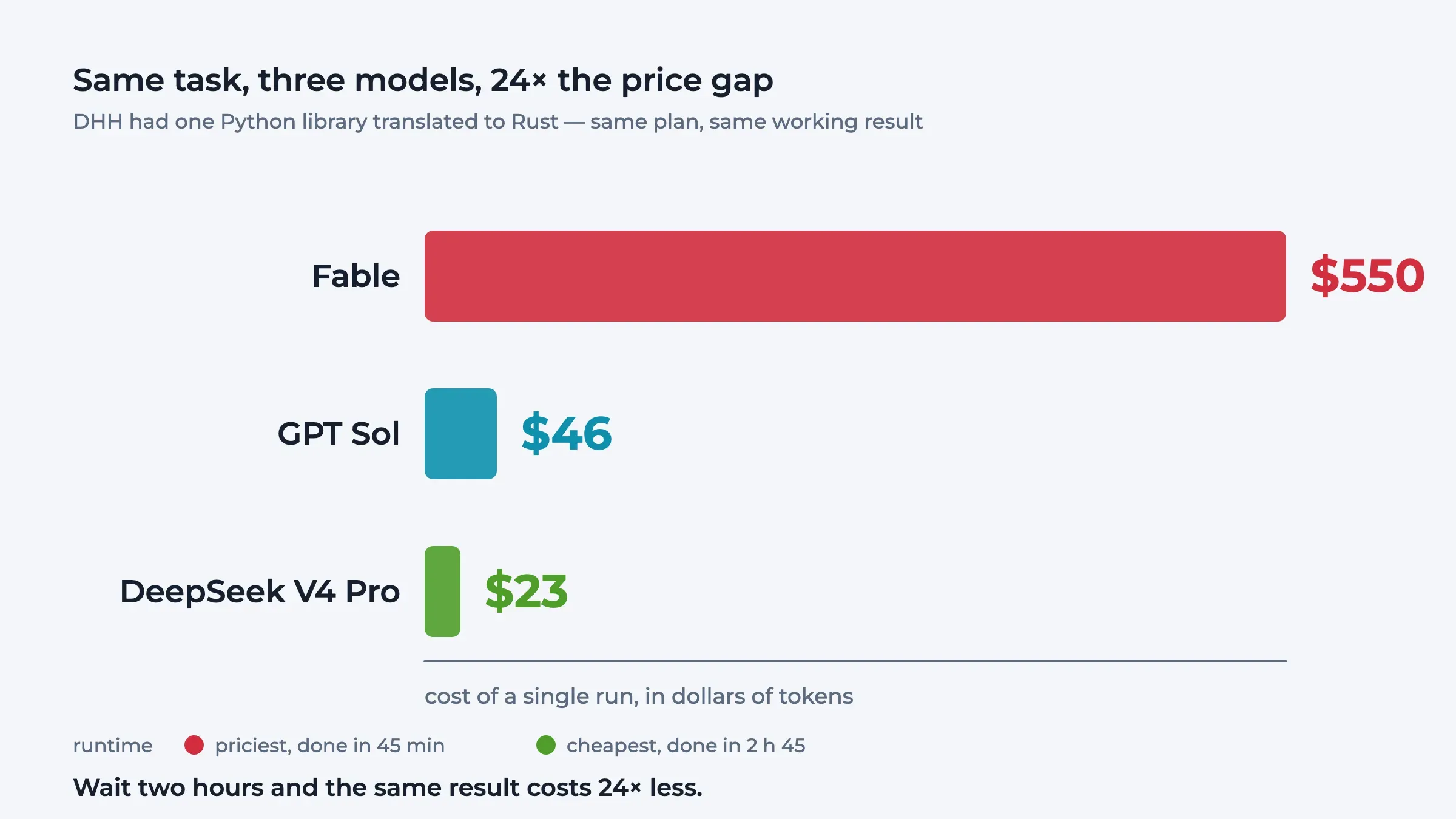
The creator of Ruby on Rails no longer writes a line of code himself and drives sixteen agents at once. From five hours ...
Zenthropic: AI phone agents that pick up 24/7
The phone rings outside office hours, during an incident, or exactly when everyone is in a meeting. Zenthropic puts an A...