A $200 AI subscription delivers $14,000 of compute. But does the maths hold up?

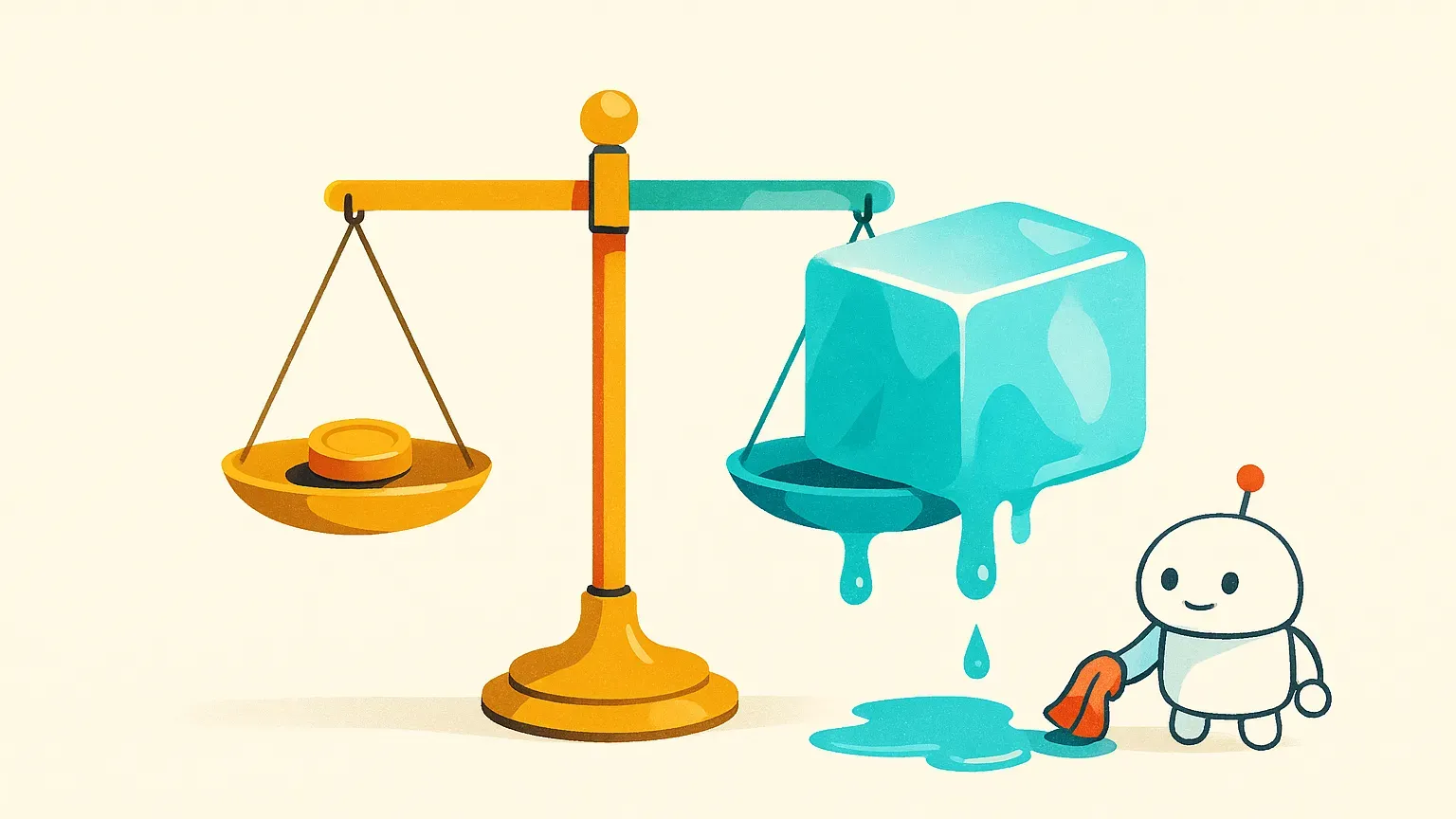
You have probably seen the screenshot, most likely with a row of flame emoji under it. A $200 a month ChatGPT Pro subscription delivers about $14,000 a month of API usage. Claude Max, at the same price, about $8,000. It circulates with the conclusion attached: the labs lose a fortune on every heavy user, and this cannot last.
The source is better than most viral numbers. SemiAnalysis bought one of each OpenAI and Anthropic plan, ran long-horizon coding tasks until the weekly caps ran out, and priced the resulting token volume at API list rates. The earlier rule of thumb was about $2,000, so this is a real finding. I use these tools every day for cloud and software work, so I followed the number to its source. The research holds up; the reading glued to it is another matter.
Why the sum does not add up
API list prices carry large margins. Epoch AI estimates that GPT-class models are served at around 50% gross margin, and Anthropic's API margin has been reported above 80%. Price $14,000 of retail API usage at cost and you get perhaps $3,000 to $7,000 of compute.
The figure also assumes a user who exhausts the weekly caps every week. SemiAnalysis's own companion number is that OpenAI crosses into loss at roughly 11% of a base plan's limits, so most subscribers sit well inside the line and a minority of heavy users far past it. The $14,000 is what the heaviest possible use would have cost you at retail. The honest version is that OpenAI loses money on its heaviest users, by an amount nobody outside the company knows, on a plan most subscribers use lightly.
Everyone had a use for this number
That the figure was adopted so readily does not surprise me, because nobody had to lie. For the labs, "we are losing money on you" is a useful sentence: it pre-justifies every price rise for three years. When Sam Altman wrote on X in January 2025 that OpenAI was losing money on the Pro plan because people used it far more than expected, it was humblebrag and expectation management at once.
Is this not just Uber and AWS all over again?
Subsidise your way in, own the market, raise prices later. That playbook is familiar and deserves a real answer. Uber burned roughly $30bn doing it over fourteen years. AWS is the misremembered case: it is assumed to have lost money for years, but when Amazon first broke it out in 2015 it was already keeping almost 24% of revenue after all the costs of running it. Capital hungry, not loss making. On that axis OpenAI looks more like AWS than Uber: answering questions makes money on its own, about 43 cents per dollar on the 2025 figures, and the loss sits in building new models.
Where it breaks down is the moat. Uber's subsidy bought enough drivers and riders in each city that a ride is always close; AWS bought customers whose data now sits so deep inside it that moving out takes years. Model labs buy distribution and habit, and that is real, but there is no network effect between users and at the API layer switching costs are close to nil. Uber never faced a rival giving rides away at cost with a free dispatcher anyone could copy; the labs face that roughly once a year.
The real difference: how long a model lasts
The cost curve is better than Uber's and worse than it looks. Getting an answer out of an existing model genuinely gets cheaper, around 95% per question for the same level of capability, which is why code is getting cheap. But the cost of running the actual frontier rises steeply, and demand migrates to the frontier as fast as it arrives. And where Uber built a network once, OpenAI's 2025 R&D spend of $19.18bn (on the leaked statements Ed Zitron obtained and the Financial Times verified) buys a model that is commercially stale within twelve to eighteen months, including against models you can download for free. So OpenAI pays again every year, and more, to stay in. The nearest comparison is a pharmaceutical company with a two-year patent.
Brand, distribution and agent-level lock-in do accumulate even while the models decay, and whether they accumulate faster than the models decay is the whole question. Nobody knows yet. What the bet costs in the meantime fits no comparison: OpenAI's operating loss for 2025 was $20.92bn on $13.07bn of revenue, Uber's entire fourteen-year cumulative loss is smaller than that one year, and it sits against reported compute commitments in the region of $600bn through 2030.
What this means for anyone buying it
In all of this we only look at the survivors: we reach for Uber and AWS because they worked, while the same playbook also produced WeWork and MoviePass. And there is a live counterexample, because Anthropic reached roughly 60% gross margin in 2026, up from deeply negative in 2024, mostly with business customers and without subsidising power users as hard. If that route works, the land grab is a choice rather than a law.
For anyone buying these tools, here is what follows. The subscription is underpriced today: use it hard, and budget for the price rises that "we are losing money on you" is preparing you for. Switching cost at the API layer is close to zero; keep it that way, and never let your own software quietly assume one model or one vendor. At ZEN a route to another or an open model is part of every design, in the AI work and the custom software around it. My expectation: within a year the subscriptions are dearer and the limits tighter, and in three years the winner is whoever owns the workflows that model sits in. Make sure that is you.

The Agent Writes It. Who Reviews It?
AI raises your throughput and lowers your certainty. We help teams stay fast without losing control.
AI engineering
Use AI where it genuinely helps, with accountability staying with people.
Read more:
OpenAI's AI agents broke into another company. So why are we calling it a conspiracy?
OpenAI's AI agents broke into Hugging Face, another AI company, this summer. Dwarkesh Patel called it an AI civilisation...
In 1988 a student took down a tenth of the internet. What did we do next?
In November 1988 a student at Cornell wrote a small program to count how many computers were on the internet. A bug took...

AI Makes Code Cheap. Your Organization Is Still Expensive.
Developers in a controlled trial were 19% slower with AI and believed they were 20% faster. Meanwhile DORA found that or...

My AI Agent Works Through the Night. It Just Can't Decide Anything.
Since August, an agent runs every weekday at half past seven, reads our open merge requests and forms an opinion on each...
48 major outages in twelve months. What is going on at GitHub?
Eight hours down in a single afternoon, 48 major outages in a year, and the largest cause is capacity. On GitHub becomin...

What you're missing with AI agents is rarely a tool
I have been running several AI agents side by side for months. After five hours of DHH on programming with agents, my to...